





 Locks & Cylinders

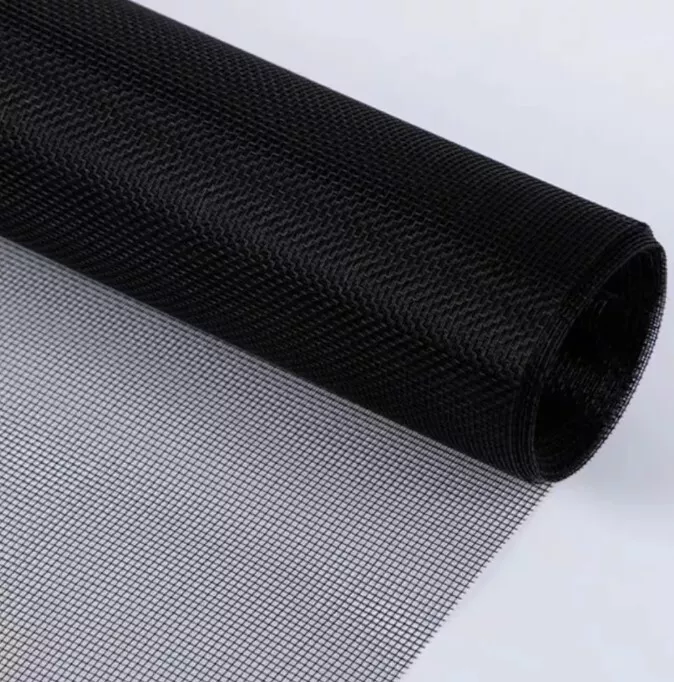 Stainless Steel Flyscreen Mesh
 Pet Paw Resistant Flyscreens and Mesh
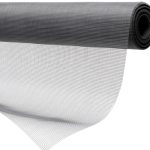 Aluminium Flyscreen Insect Mesh
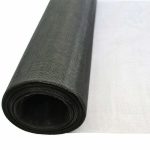 Flyscreen Insect Mesh Nylon Heavy Duty
 Flyscreen Accessories, Clips & Spline


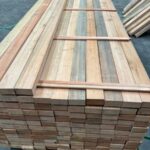 F17 Hardwood

TradeBase Buying Guide
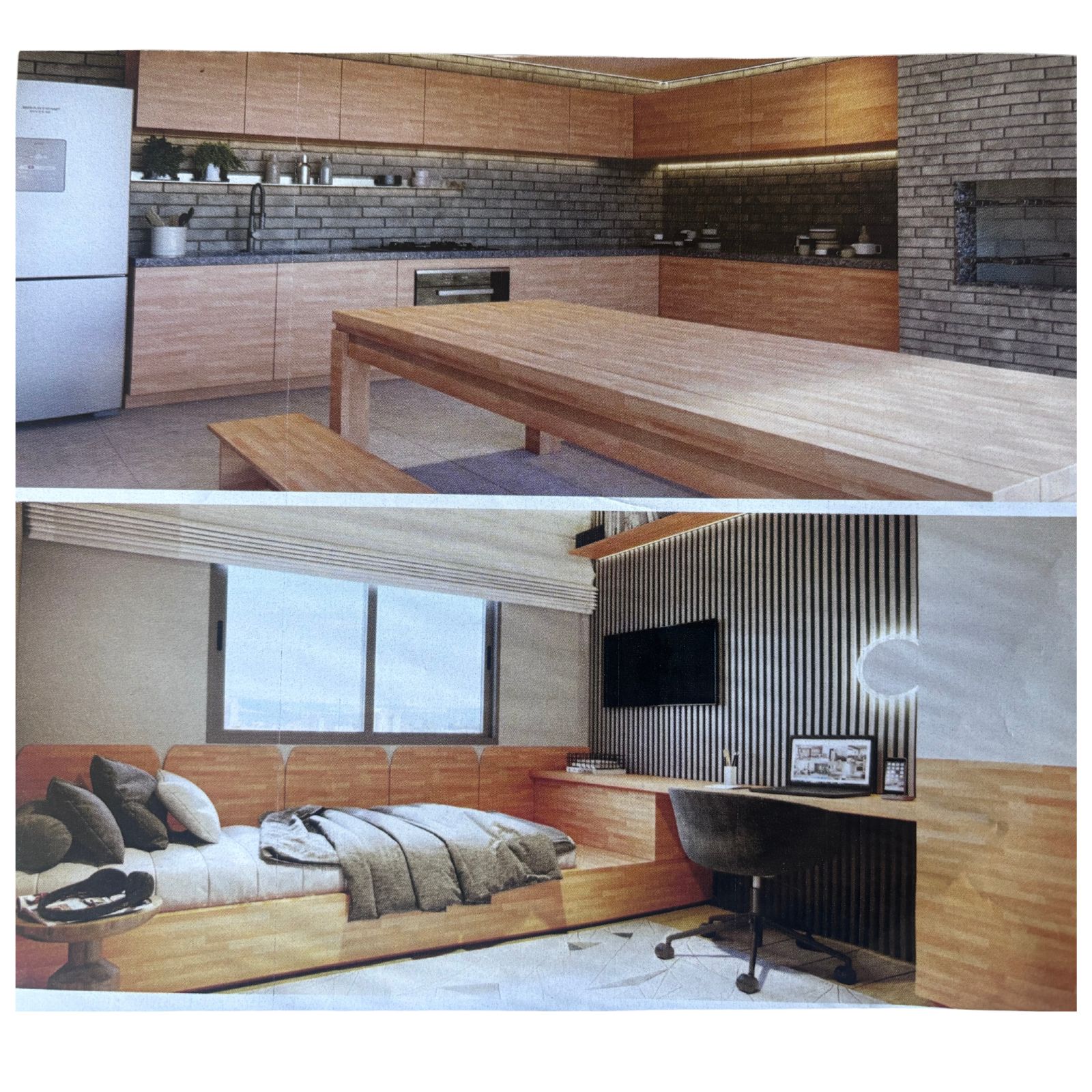
Hardwood panels — lightweight benchtops, desktops & shelving with a real-timber feel
Sydney Rose Gum Grandis laminated panel boards. Australian-grown, kiln-dried, plantation-source certified. Furniture-ready surface. Two stock sizes — for kitchens, desks, shelving and the lightweight build-outs in caravans, vans, tiny homes and granny flats.
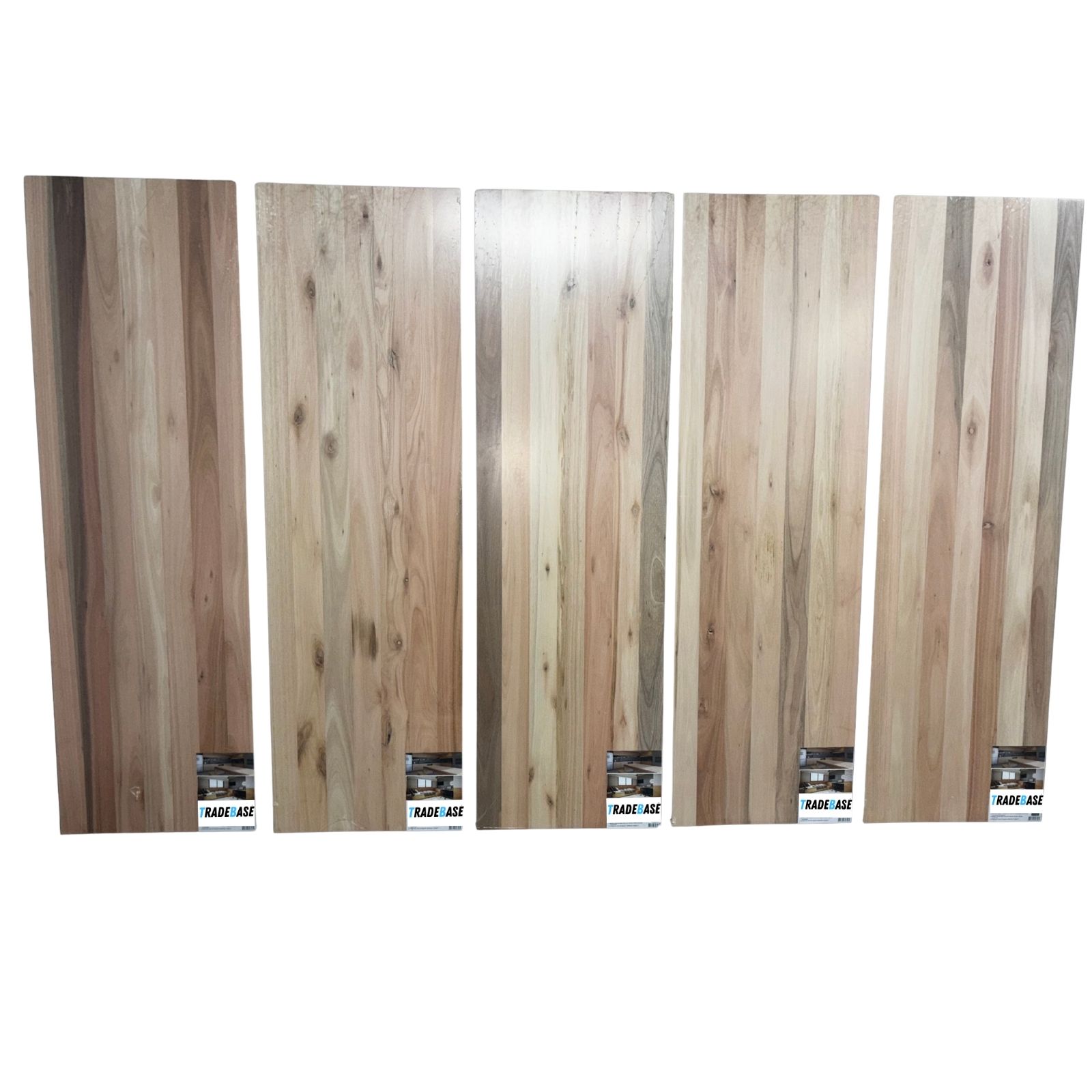
TradeBase hardwood panels are edge-glued, kiln-dried laminated boards in Sydney Rose Gum Grandis — a fast-growing Australian plantation hardwood (Eucalyptus grandis × urophylla). The result is a furniture-ready solid-timber panel that’s lighter than an oak or jarrah equivalent, dimensionally stable and ready to oil, stain or clear-coat. Two sizes cover the typical jobs.
The two stock sizes
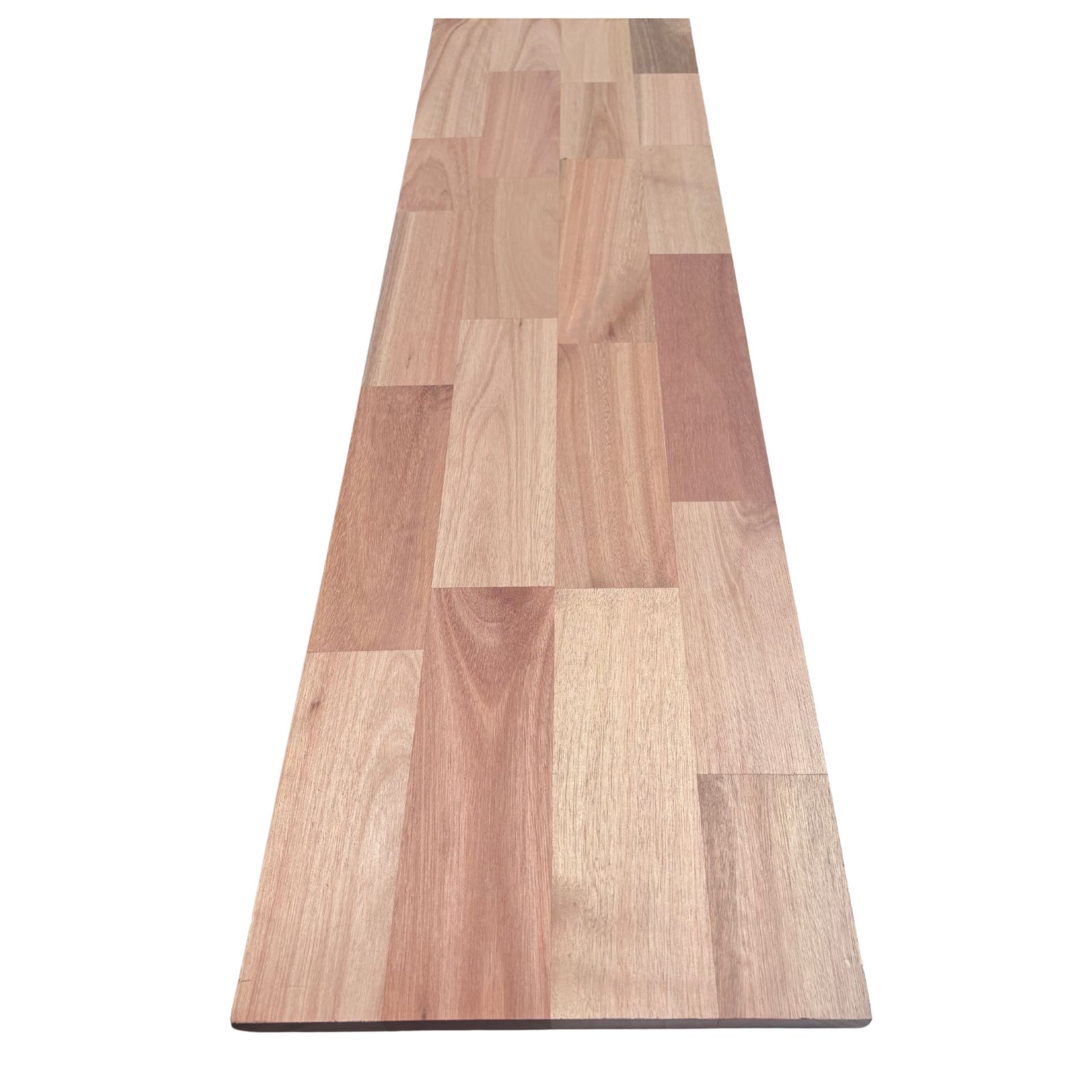
Compact · GLFJ
18 × 300 × 1200 mm
Compact desktop, narrow shelf, custom cabinet door, caravan benchtop, van conversion countertop, tiny-home shelving. Right size for a small bench-style desk or single-monitor workstation. Light enough to handle solo.
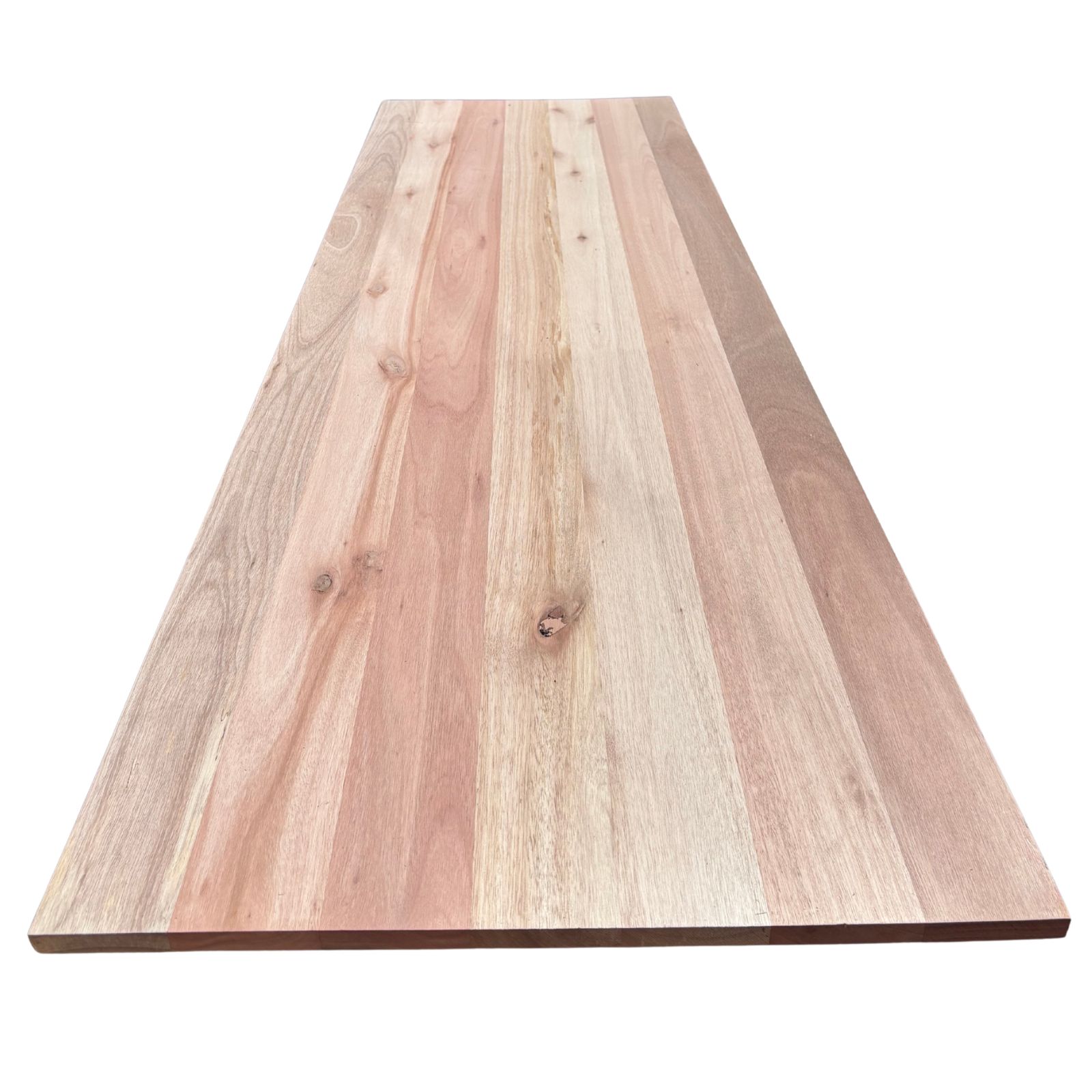
Standard benchtop · GL18
18 × 600 × 2000 mm
Standard kitchen benchtop length, full-size desk, dining table top, vanity, study nook. Most popular size for renovators. Cuts down cleanly to fit caravan bench runs and tiny-home kitchen islands.
Why hardwood panels for caravans, vans & tiny homes?
Mobile build-outs — caravans, camper vans, motorhomes, tiny homes, granny flats and shed conversions — have a payload problem. Every kilo of benchtop or shelving is a kilo less of water tank, gear, or passenger weight. Stone or solid jarrah benchtops add real mass. Sydney Rose Gum Grandis is a lightweight hardwood (around 600 kg/m³ vs 850–900 for jarrah or spotted gum), so an 18 mm panel weighs roughly 30–35% less than a denser equivalent. You still get the look and feel of real timber — visible grain, warm finish, the ability to oil or sand and refinish — without the structural penalty of a heavy panel.
- Lightweight — ~30% lighter than jarrah or blackbutt at the same thickness
- Real-timber look and feel — not laminate or vinyl-wrap MDF, real solid hardwood grain
- Easy to work with — cuts, drills and routs cleanly with standard timber tools, no exotic blades
- Refinishable — sand and recoat as the build ages, unlike a damaged stone or laminate top
- Stable — edge-glued and kiln-dried so it won’t twist or cup in heat-and-humidity cycles inside a van or caravan
- Plantation-source — Australian-grown, plantation-certified, environmentally sound
Best uses in mobile builds
- Caravan benchtops — the 1200 mm size cuts down to most caravan kitchenette runs without joins
- Van fit-out countertops — sprinter, transit and ducato builds
- Tiny home benchtops & islands — the 2000 mm panel covers a typical tiny-home kitchen run
- Floating shelves & cubby shelving — warm timber feel without overloading wall fixings
- Drop-down tables, fold-out desks — light enough to swing on hinges without sagging
- Bed bases, slat boards, storage tops — weight-sensitive secondary surfaces
Other common uses
- Kitchen and laundry benchtops — full-house renovations
- Custom desks and writing tables — home offices and study nooks
- Floating shelving — living rooms, bathrooms, retail fit-outs
- Stair treads and risers — with appropriate underlay and code-compliant fixings
- Cabinet doors and box construction — furniture and built-ins
- Dining table tops — trestle and pedestal bases
- Vanity tops — sealed properly for wet-area use
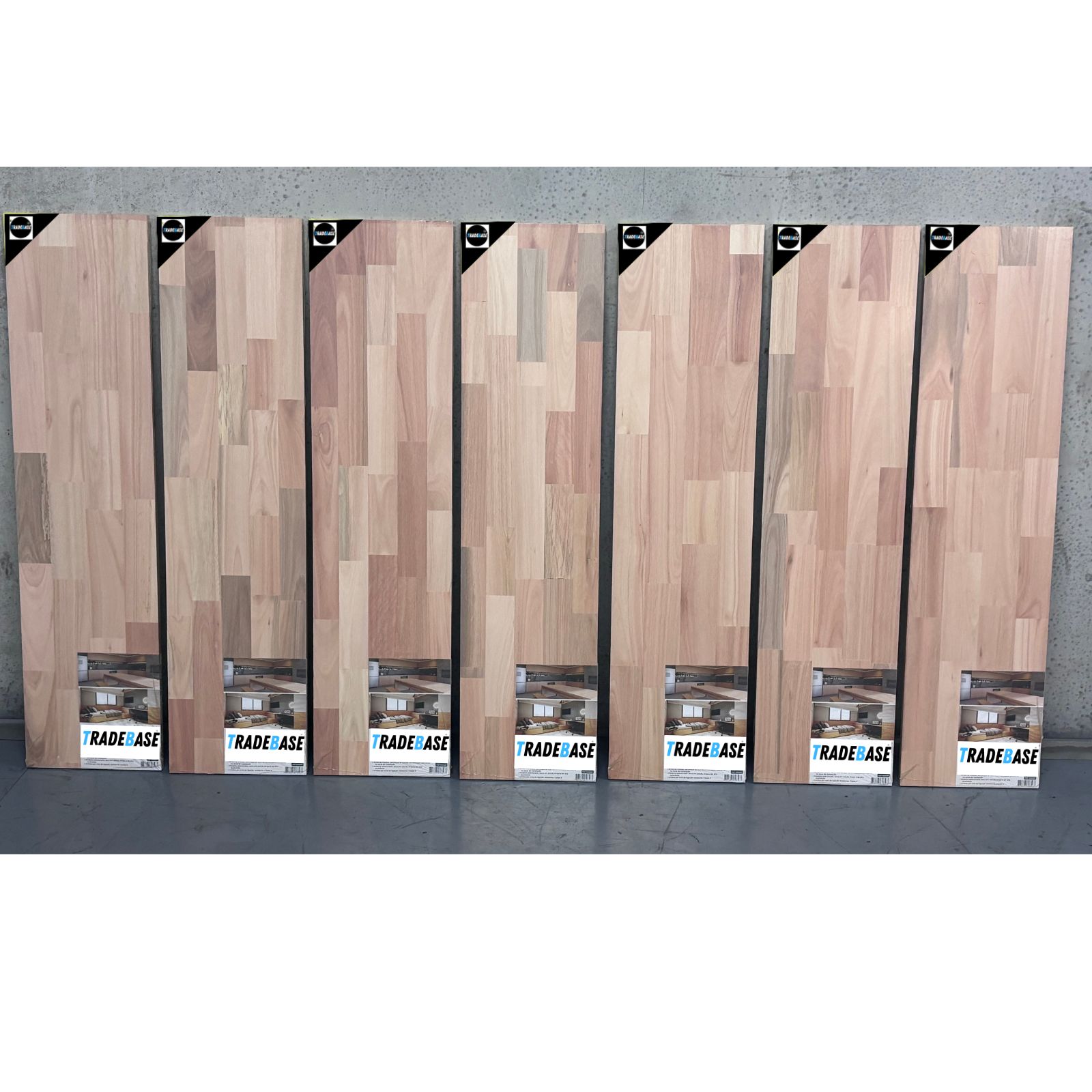
For colour-critical projects (matching to existing furniture or cabinetry) order one panel first, look at it under your lighting, then come back for the rest. Boards from the same batch will be close in tone but never identical — that natural variation is part of the appeal.
Finishing & sealing
Panels ship sanded but unsealed. For benchtops use a hard-wax oil (Osmo, Rubio Monocoat) or a polyurethane top-coat — food-safe finish for kitchen and benchtop applications. For desk and shelving applications a Danish oil or natural beeswax finish brings out the grain without the plastic look. For caravan and tiny-home builds in humid climates, two coats of marine-grade polyurethane will lock the panel against moisture cycles. Light sand between coats. Sealing all six sides (top, bottom, all four edges) is critical in mobile builds where humidity changes are extreme.
Cutting & fixing
Cut with a sharp tungsten-tipped circular saw or jigsaw, blade direction face-up to minimise tear-out. Pre-drill before screw fixing — the laminations grip screws well but the surface can chip if you skip the pilot hole. For benchtop installs use timber to cabinet brackets or under-mount cleats; for floating shelves use heavy-duty concealed brackets rated to span the panel length.
Builders, cabinet-makers, joiners, caravan fitters & tiny-home builders — trade pricing
Set trade rates for builders, cabinet-makers, joiners, caravan fitters and tiny-home builders. Tell us your project size and we’ll come back inside 24 hours with rates locked in for the build, plus priority dispatch on every order.
What it gets called — the same product, different names
Builders, cabinet-makers, landscapers, timber merchants, hardware staff and homeowners all reach for different words for the same board. A joiner asks for an edge-glued panel, a renovator searches for a timber benchtop, a van builder types “butcher block” and a caravan fitter just wants “a 2 metre bench”. They are all describing the same product. This is the translation.
| What we call it | Also known as |
|---|---|
| Hardwood laminated panel board | edge-glued panel, EGP, glued-up board, solid timber panel, laminated board, butcher-block panel |
| Sydney Rose Gum Grandis | rose gum, flooded gum, Eucalyptus grandis, grandis, plantation eucalypt hardwood |
| Edge-glued construction | edge glued, glued up, staved, strip glued, laminated, EGP |
| Finger-jointed (GLFJ) | finger jointed, finger joint, FJ, end jointed, jointed panel |
| 18 × 600 × 2000 mm panel | 2 metre benchtop, 2m board, 2000mm benchtop, 600 wide panel, full-length bench board |
| 18 × 300 × 1200 mm panel | 1.2 metre board, 1200mm panel, 300 wide board, shelf board, small desktop panel |
| 18 mm thickness | 18mm, 18 mil, eighteen mil, board thickness, finished thickness, dressed thickness |
| Panel width | width, board width, bench depth, benchtop depth, 600 deep, front-to-back |
| Kiln-dried | KD, kiln dried, seasoned, dried timber, dry stock, dressed and dried |
| Benchtop | kitchen bench, bench top, benchtop slab, countertop, counter top, worktop |
| Desktop | desk top, desk board, table top, study nook top, workstation top |
| Floating shelf board | floating shelf, shelf board, shelving board, timber shelf, hardwood shelf, mantel board |
| Sanded, unsealed surface | raw, bare timber, unfinished, untreated, ready to oil, needs sealing |
| Hard-wax oil finish | wax oil, hardwax oil, penetrating oil, Danish oil, natural oil finish, food-safe oil |
| Polyurethane top-coat | poly, polyurethane, clear coat, two-pack clear, varnish, lacquer |
| Concealed shelf bracket | floating shelf bracket, hidden bracket, blind shelf support, invisible bracket, concealed fixing, shelf rod |
Two things buyers most often get wrong
1. “Laminated” here means edge-glued solid timber, not laminate. In this listing, laminated describes how the board is built — narrow strips of solid Sydney Rose Gum Grandis glued edge to edge into one panel. It is not a laminate benchtop, not a vinyl-wrap finish and not a printed surface over MDF or particleboard. The grain runs right through, which is why you can cut it, rout it, sand it and recoat it. If you want a timber-look sheet product, this is not it; if you want real hardwood you can machine like timber, it is.
2. “Hardwood” does not mean heavy — and “lightweight” does not mean pine. Buyers searching for a hardwood benchtop usually picture jarrah or spotted gum at 850–900 kg/m³, and buyers searching for a lightweight panel usually expect a softwood. Sydney Rose Gum Grandis is a genuine Australian hardwood at around 600 kg/m³ — real hardwood grain, roughly 30–35% lighter than the dense eucalypts at the same 18 mm thickness. That is the whole point of it in a caravan, van or tiny-home fit-out, where payload matters. Check the species and the density, not just the word on the label. More guides in the same format are in the TradeBase buying guides hub.
Still not sure?
Email your project description and approximate dimensions to sales@tradebaseaustralia.com.au — we’ll confirm the right panel size and give you a recommended finish for your application. Or browse the full timber range, or the rest of the TradeBase buying guides.
Hardwood panel FAQ
The 18 × 600 × 2000 mm panel is the standard benchtop size and the one most renovators buy. Its 600 mm width matches typical Australian bench depth and the 2000 mm length covers a normal kitchen run, a full-size desk, a dining table top or a vanity. The smaller 18 × 300 × 1200 mm panel suits narrow shelving, a compact desktop, a cabinet door or a caravan kitchenette bench. Both boards are 18 mm thick, so you are choosing on length and width alone.
It is real solid timber. Laminated here describes how the panel is built — narrow strips of solid Sydney Rose Gum Grandis glued edge to edge into one board — not a laminate benchtop, a vinyl wrap or a printed surface over MDF or particleboard. The grain runs right through the full 18 mm thickness, which is why you can cut it, rout it, sand it back and recoat it as the job ages. If you want a timber-look sheet product, this is not it.
Roughly 30 to 35% lighter at the same 18 mm thickness. Sydney Rose Gum Grandis sits at around 600 kg per cubic metre, where jarrah and spotted gum run 850 to 900. It is still a genuine Australian hardwood with real hardwood grain — lightweight does not mean pine here. That weight saving is the reason it works in caravans, camper vans, motorhomes and tiny homes, where every kilo of benchtop is a kilo off your water tank, gear or passenger payload.
They ship sanded but unsealed, so you finish them to suit the job. For kitchen and laundry benchtops use a hard-wax oil or a polyurethane top-coat with a food-safe finish. For desks and shelving, a Danish oil or a natural beeswax finish brings out the grain without the plastic look. Light sand between coats. Finishing the panel yourself also lets you match the tone to your existing cabinetry rather than accepting a factory colour.
Two coats of marine-grade polyurethane, and seal all six sides — the top, the underside and all four edges. Mobile builds in humid climates swing through extreme moisture cycles, and an unsealed face or edge is where water gets in and moves the timber. The panel is edge-glued and kiln-dried so it will not twist or cup through the heat and humidity cycles inside a van or caravan, but that stability depends on the board being sealed the whole way around.
Cut with a sharp tungsten-tipped circular saw or jigsaw and keep the blade direction face-up to minimise tear-out. Always pre-drill before screw fixing: the laminations grip screws well, but the surface can chip if you skip the pilot hole. For benchtop installs, fix with timber to cabinet brackets or under-mount cleats. For floating shelves, use heavy-duty concealed brackets rated to span the panel length.
Yes. TradeBase has set trade rates for builders, cabinet-makers, joiners, caravan fitters and tiny-home builders. Send through your project size and we come back inside 24 hours with rates locked in for the build, plus priority dispatch on every order. If colour consistency matters across a run, order one panel first and look at it under your own lighting — boards from the same batch are close in tone but never identical.