



 Locks & Cylinders

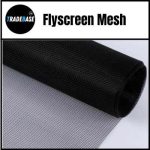
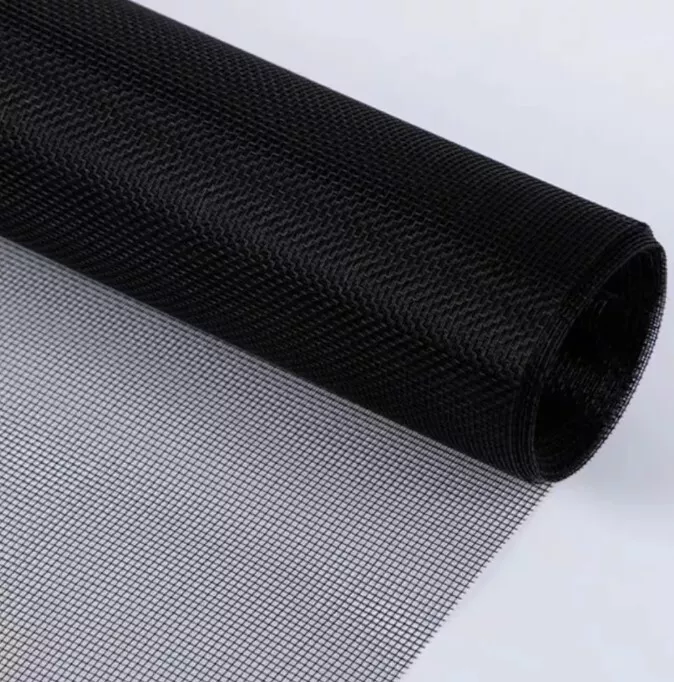 Stainless Steel Flyscreen Mesh
 Pet Paw Resistant Flyscreens and Mesh
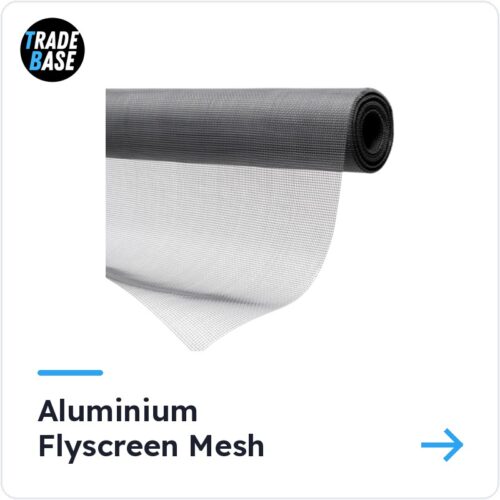
 Aluminium Flyscreen Insect Mesh
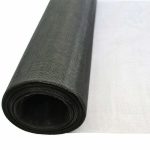 Flyscreen Insect Mesh Nylon Heavy Duty
 Flyscreen Accessories, Clips & Spline
 F17 Hardwood
TradeBase Buying Guide
Choose the right flyscreen mesh in 60 seconds
Five mesh types, six widths, three roll lengths. 316 marine-grade stainless, super heavy-duty aluminium, standard aluminium, alkaline-free fibreglass, and pet-paw resistant. BAL-rated bushfire options. Tiered pricing on every roll.
Shop by mesh type
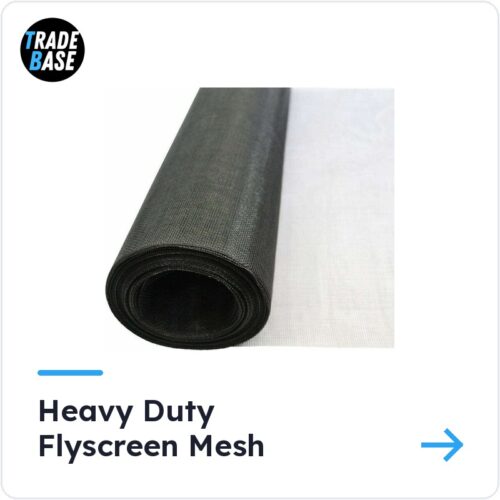
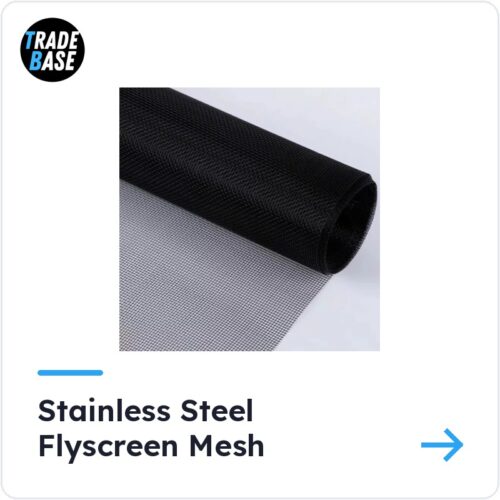
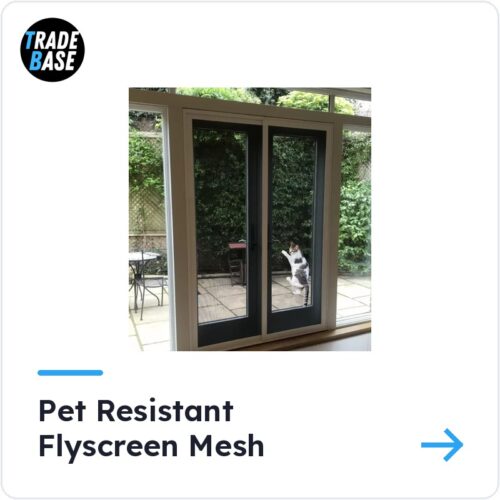
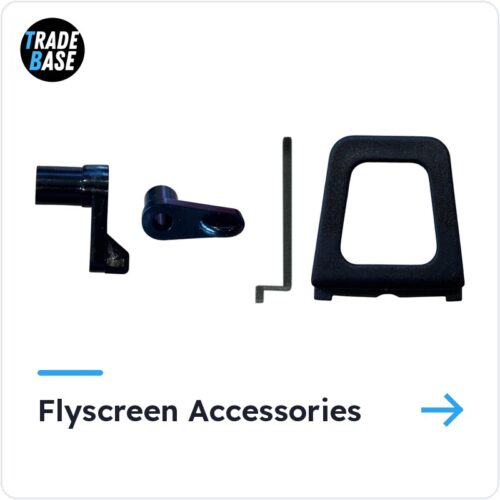
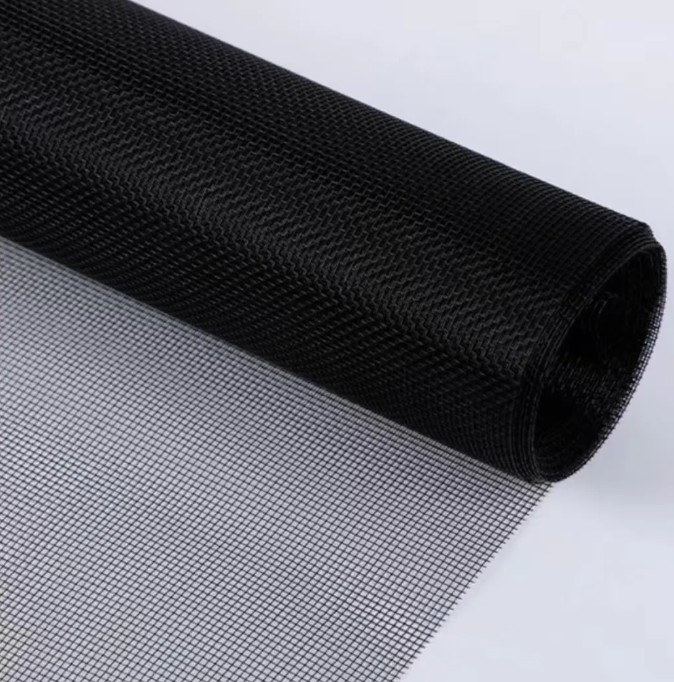
Re-meshing a flyscreen looks simple until you stand in front of the rolls and realise they’re not all the same thing. Aluminium and fibreglass are different materials. Within aluminium itself there are two grades: a standard 30 m roll for general residential use, and a super heavy-duty 0.46 mm wire on 14 m rolls for high-traffic doors and security screens. 316 marine-grade stainless steel is BAL-rated for bushfire zones and runs at premium pricing for that reason. Pet-resistant mesh is a different beast made for households where dogs or cats scratch through standard insect screen. This guide walks through every decision in the right order so you end up with the right roll the first time.
The 60-second decision
- What’s the use case? Standard insect protection, high-traffic door, coastal/bushfire-rated, or pets scratching through?
- Which mesh? Fibreglass, standard aluminium, super heavy-duty aluminium, 316 marine stainless, or pet-resistant.
- What width? 610 mm to 2440 mm rolls.
- How long? 14 m, 30 m, or 50 m roll — tiered pricing per metre on bigger rolls.
- What accessories? Spline, corner stakes, swivel clips and pull tabs.
The mesh range
Click any card title to view that mesh in the shop.
Fibreglass
Standard residential →
- 0.28 mm alkaline-free fibreglass
- Most common Australian residential mesh
- Easier to spline-fit than aluminium
- Lower cost, replaceable every 8–15 years
- Sold on 50 m rolls in 6 widths
Standard Aluminium
Step up from fibreglass →
- Standard-gauge aluminium wire
- Powder-coated charcoal black
- Holds shape better than fibreglass
- 30 m roll length, 5 widths
- Use for: standard windows, screen doors needing more durability than fibreglass
Super HD Aluminium
0.46 mm wire, heavy duty →
- 0.46 mm super heavy-duty aluminium wire
- ~60% thicker strand than standard aluminium
- Holds shape under high wind load
- 14 m roll, 910 mm and 1220 mm widths
- Use for: large doors, frequently-cleaned screens, commercial fitouts
- Also a great pet option — thicker wire resists most dog & cat scratching
316 Marine Stainless
Coastal & bushfire-rated →
- 316-grade stainless steel weave
- BAL-rated for bushfire zones (AS 3959)
- Salt-spray resistant for coastal builds
- 30 m roll, 5 widths
- Use for: coastal homes, BAL-29 to BAL-40 compliance
Pet-Paw Resistant
Dog & cat households →
- 0.80 mm reinforced polymer
- 3× thickness of standard fibreglass
- Resists scratching, jumping, lean-against damage
- White, black or silver/grey edge
Standard aluminium vs super heavy-duty — what’s the difference?
Standard aluminium — 30 m roll
Step up from fibreglass for windows and doors that get more day-to-day use. Aluminium holds shape better, won’t bow inward on big openings, and lasts longer. Available in five widths (610–1220 mm) on 30 m rolls. 610 mm · 760 mm · 810 mm · 910 mm · 1220 mm
Super heavy-duty — 0.46 mm wire, 14 m roll
Thicker wire (0.46 mm vs standard gauge) for the toughest residential and commercial applications. Use on full-height security door panels, frequently-pressure-washed screens, and any opening over 1.2 m wide where wind load is a factor. Sold on 14 m rolls in 910 mm and 1220 mm widths. 910 mm × 14 m · 1220 mm × 14 m.
🦣 Mid-tier pet option too — the thicker 0.46 mm wire stands up to most dog and cat paw scratching, so pet households on a budget can step up from fibreglass without going all the way to the dedicated pet-resistant polymer mesh.
316 marine stainless — when it’s required
316 marine-grade stainless mesh is the most expensive of the standard insect-mesh range and isn’t necessary for most homes. Specify it when:
- The home is in a designated bushfire-prone zone (AS 3959 BAL ratings) — standard meshes won’t comply
- The home is within ~1 km of the coast and salt-spray exposure rules out other materials
- Council, builder or insurance requires marine-grade as part of the build spec
For inland residential without bushfire requirements, super heavy-duty aluminium gives you most of the durability at a fraction of the cost. Sizes: 610 mm · 760 mm · 910 mm · 1220 mm · 1520 mm.
Width — what do I need?
Measure the inside dimensions of the screen frame — the part the spline sits in — and add about 50 mm to each dimension. Then choose the next-largest stocked width up.
| Width | Fibreglass | Standard Aluminium | Super HD Aluminium | 316 Marine |
|---|---|---|---|---|
| 610 mm | 50 m | 30 m | — | 30 m |
| 760 mm | 50 m | 30 m | — | 30 m |
| 810 mm | 50 m | 30 m | — | — |
| 910 mm | 50 m | 30 m | 14 m | 30 m |
| 1220 mm | 50 m | 30 m | 14 m | 30 m |
| 1520 mm | 50 m | — | — | 30 m |
| 1800 mm | 50 m | — | — | — |
| 2140 mm | 50 m | — | — | — |
| 2440 mm | 50 m | — | — | — |
Tiered pricing across every roll
Per-metre cost drops with bigger rolls. Multi-roll trade pricing for installers, builders and property services — email your typical monthly volume for set rates.
Accessories — spline, corner stakes, swivel clips, pull tabs
Re-meshing a flyscreen is a 15–30 minute job per panel with the right consumables. Don’t order mesh without checking these:
Spline (rubber gasket)
Polythene foam spline holds the mesh in the frame channel. Sized 5.0, 5.3, 5.7, 6.0 or 6.3 mm. Cut-to-size or bulk trade rolls
Corner stakes
Hold the frame square while the mesh is splined. 9 × 22 mm · 11 × 25 mm
Swivel clips
Hold the screen panel inside the window opening. Black flush 1.6 mm
Lift tabs / pull grips
Finger pulls fitted to the frame edge for easy screen removal — the small tabs you grab to pop the screen out for cleaning. 22 mm frames · 25 mm frames
What it gets called — the same product, different names
Screen fabricators, glaziers, hardware stores and DIYers all use different words for the same thing. If the name you have been given doesn’t match anything on the site, this is the translation.
| What we call it | Also known as |
|---|---|
| Flyscreen mesh | Insect screen mesh, flywire, fly wire, fly screen mesh, window screen mesh, bug screen, insect mesh, screen wire, gauze |
| Fibreglass mesh | Vinyl-coated fibreglass, glass fibre mesh, standard flyscreen mesh, charcoal fibreglass |
| Aluminium mesh | Alloy flywire, aluminium flyscreen wire, aluminium gauze, alloy mesh |
| Spline | Screen spline, rubber spline, screen rubber, wedge cord, gasket cord, retaining spline, flyscreen bead |
| Spline roller | Screen roller tool, spline tool, screening tool, roller wheel tool |
| Frame | Screen frame, flyscreen frame, surround, sash frame |
| Corner stake | Corner key, corner joiner, frame corner, insert corner, corner cleat |
| Mesh roll | Bulk roll, mesh reel, flyscreen roll, wire roll |
| Pet mesh | Pet-resistant mesh, pet screen, dog-proof mesh, cat-proof screen, heavy duty flyscreen mesh |
| Midge mesh | Sandfly mesh, no-see-um mesh, fine mesh, midgie mesh, sandfly screen |
| Solar / privacy mesh | Sunscreen mesh, shade mesh, solar screen, vision-control mesh, privacy screen mesh |
| Charcoal | Dark grey, black-grey, standard charcoal |
Two things the names hide.
1. Spline is the giveaway on security screens. Flyscreen mesh is held in by a rubber spline rolled into a groove. Security screen mesh is not — it is retained by an aluminium beading that is screwed or riveted into place. If someone offers you spline to retain a security screen, they are selling you a flyscreen, not a security screen.
2. Spline size matters. Heavier mesh — pet mesh especially — needs a smaller spline in the same groove, because the mesh itself takes up room. Ordering the same spline you used with fibreglass is the most common re-order on this category. Measure the groove and match the spline to the mesh you are actually fitting.
Common scenarios
| Scenario | What you need | Example product |
|---|---|---|
| Standard suburban window or screen door | Fibreglass, 910 mm, 50 m roll | 910 mm × 50 m Fibreglass |
| Whole-house re-mesh, inland | Fibreglass, mid-width, 50 m roll | 1220 mm × 50 m Fibreglass |
| Step up from fibreglass — standard windows | Standard aluminium, 30 m roll | 1220 mm × 30 m Aluminium |
| Heavy-use screen door / mid-tier pet | Super HD aluminium 0.46 mm, 14 m roll | 1220 mm × 14 m HD Aluminium |
| Wide patio screen panels | Fibreglass, 2440 mm, 50 m roll | 2440 mm × 50 m Fibreglass |
| Coastal home, salt-spray exposed | 316 marine-grade stainless | 1220 mm × 30 m Marine 316 |
| Bushfire-zone build (BAL-rated to BAL-40) | 316 marine-grade stainless | 1520 mm × 30 m Marine 316 |
| Pets scratching through current screen | Pet-paw resistant 0.80 mm polymer | See Pet Mesh Guide → |
| Replace a broken pull tab | Lift tab matching frame size | 22 mm Lift Tab |
| Installer / builder / property services, ongoing | Set trade pricing, multi-roll volume | Email sales@tradebaseaustralia.com.au |
Brand compatibility
TradeBase mesh fits any standard Australian flyscreen frame — the spline-and-channel system has been the industry standard for decades. Compatible with most popular frame brands including Stegbar®, A&L®, Bradnam’s®, Wideline®, Trend®, AWS® and Dowell®, plus generic aluminium and timber DIY frames sold at Bunnings, Mitre 10 and Home Hardware.
Compliance — bushfire and security ratings
| BAL level & exposure | 316 Marine Stainless up to BAL-40 |
Aluminium Insect Mesh up to BAL-29 |
|---|---|---|
| BAL-12.5 Ember attack & radiant heat up to 12.5 kW/m² | ✔ | ✔ |
| BAL-19 More embers & debris; radiant heat to 19 kW/m² | ✔ | ✔ |
| BAL-29 Heavier ember load; radiant heat to 29 kW/m² | ✔ | ✔ |
| BAL-40 Intense embers, radiant heat to 40 kW/m², likely flame contact | ✔ | ✗ |
| BAL-FZ (Flame Zone) Direct sustained flame contact | ✗ | ✗ |
Mesh fitted in designated bushfire zones is regulated under AS 3959:2018. Our 316 marine-grade stainless steel mesh meets the deemed-to-satisfy screening requirement (sub-2 mm aperture, corrosion-resistant 316) for bushfire-prone zones up to BAL-40. Our aluminium insect mesh is accepted up to BAL-29 — aluminium is not permitted above BAL-29. No insect mesh alone qualifies for BAL-FZ (Flame Zone), which requires a fire-tested window or door system such as bushfire shutters. Standard fibreglass mesh is not BAL-rated. Note that mesh on its own doesn’t make a security screen door — that requires the door to also be tested to AS 5039 with the appropriate frame, hinges, and lock. See the security door lock buying guide.
Installation
Re-meshing takes about 15–30 minutes per panel. Pop the old spline out, lift the old mesh away, lay the new mesh over the frame with 50 mm overhang on each side, run the spline back in along all four channels with a splining tool, then trim the excess mesh with a sharp blade against the spline edge. The mesh should be slightly tensioned but not stretched. For BAL-40 installations the screen must be fitted externally in a metal frame with metal fixings, and both the openable sash and any fixed glass panels must be screened.
Still not sure?
Take a photo of the existing screen frame and email it with the rough dimensions to sales@tradebaseaustralia.com.au. We’ll match you to the right mesh, width, length and spline diameter in one reply.
Or browse the full flyscreen mesh range and the flyscreen mesh accessories. For pets, see the dedicated Pet-Resistant Flyscreen Buying Guide. Every guide we publish is listed on the TradeBase buying guides hub.
Flyscreen mesh FAQ
Alkaline-free fibreglass mesh, 0.28 mm, is the most common Australian residential flyscreen mesh and the right choice for ordinary windows and screen doors. It is the lowest cost option, easier to spline-fit than aluminium, and lasts 8 to 15 years before it needs replacing. Fibreglass is sold on 50 m rolls in six widths. If the screen gets heavier day-to-day use, step up to standard aluminium on 30 m rolls, which holds its shape better and will not bow inward on large openings.
Measure the inside dimensions of the screen frame, the part the spline sits in, then add about 50 mm to each dimension and choose the next-largest stocked width up. The extra 50 mm is the overhang you need to hold and tension the mesh while the spline is rolled in, and it gets trimmed off afterwards. Fibreglass runs from 610 mm to 2440 mm, standard aluminium to 1220 mm, super heavy-duty aluminium in 910 mm and 1220 mm, and 316 marine stainless to 1520 mm.
Only if the home is within about 1 km of the coast and salt-spray exposure rules out the other materials, or if the builder, council or insurer has specified marine grade in the build spec. 316 marine-grade stainless is the most expensive mesh in the standard insect range, so it is not necessary for most homes. For inland and sheltered suburban addresses, super heavy-duty aluminium gives you most of the durability at a fraction of the cost.
316 marine-grade stainless steel mesh is accepted up to BAL-40, and aluminium insect mesh up to BAL-29, under AS 3959:2018. Both have a sub-2 mm aperture, so they meet the opening-size rule at every level, but aluminium is not permitted above BAL-29 and from BAL-40 you need corrosion-resistant steel. Standard fibreglass mesh is not BAL-rated at all. No insect mesh on its own qualifies for BAL-FZ, the Flame Zone, which needs a fire-tested window or door system such as bushfire shutters.
Yes. TradeBase mesh suits any standard Australian flyscreen frame, because the spline-and-channel system has been the industry standard for decades. That includes Stegbar®, Bradnam’s®, Wideline®, Trend®, AWS® and Dowell® frames, plus the generic aluminium and timber DIY frames sold through Bunnings, Mitre 10 and Home Hardware. The mesh itself is not brand-specific. What matters is the groove, so match the spline diameter to the channel and to the mesh you are actually fitting.
Allow 15 to 30 minutes per panel. Pop the old spline out, lift the old mesh away, lay the new mesh over the frame with 50 mm of overhang on each side, roll the spline back into all four channels with a splining tool, then trim the excess against the spline edge with a sharp blade. The mesh should be lightly tensioned, not stretched. Spline comes in 5.0, 5.3, 5.7, 6.0 and 6.3 mm, and heavier mesh needs a smaller spline in the same groove.
Yes. Every roll is tiered priced, so the cost per metre drops as the roll gets bigger, and multi-roll trade pricing is available to installers, builders and property services. Email your typical monthly volume to sales@tradebaseaustralia.com.au and we will set rates for your account, or apply through the TradeBase trade membership page. Bulk trade rolls of spline are also stocked alongside the cut-to-size lengths.